
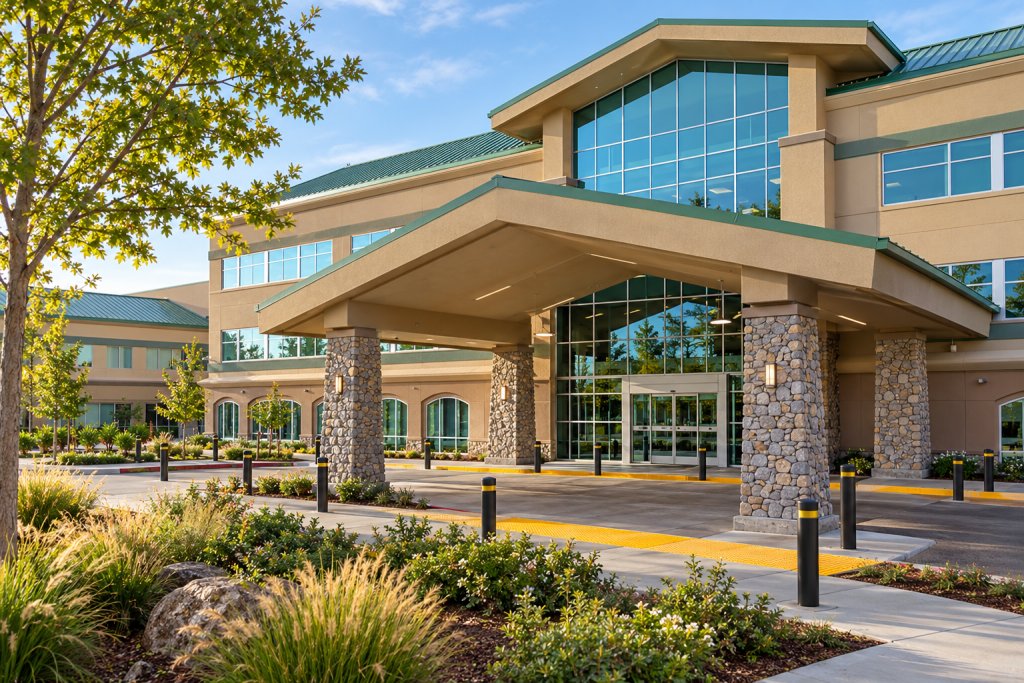

Exterior of a modern hospital entrance with a covered patient drop-off area and landscaped grounds.

Hospital & Bedside Notary Services

When someone cannot easily leave a hospital room, care facility, or bedside, arranging a notary visit takes a little coordination. I’m Greg Hill, the notary behind Hill Sign Mobile Notary. I serve Roseville, Rocklin, Lincoln, Loomis, and nearby communities, with visits arranged around the location, facility requirements, and the signer’s needs.

If you’re arranging a visit for yourself or someone else, start with a call or text. We’ll discuss the paperwork, identification, access, and timing before confirming the appointment.

Call or text Greg at (916) 778-0011 about a bedside visit.

Arranging the visit

Spacious hospital waiting area with upholstered seating, large windows, and warm overhead lighting.You do not need to know every notarial term when you contact me. A few practical details will help us work out the arrangements:

  • The facility name and address, unit or room if known, and an onsite contact.
  • Your preferred appointment time and any deadline.
  • The document type and number of people whose signatures need notarization.
  • What identification the signer has available.
  • Any communication, mobility, or physical signing difficulties.
  • Whether required witnesses have been arranged and whether you need advance printing.

A brief description is enough for the first inquiry. You do not need to send medical records or photographs of identification in an initial text.
Confirm facility access first

Ask staff whether an outside notary may visit and what check-in procedures apply. Visitor limits, unit restrictions, protective equipment, escorts, and parking can affect the visit. Please share those instructions when we schedule, and let me know if the signer changes rooms or locations.

Tests, therapy, meals, rest, and other care may interrupt an appointment. Work with staff to identify a practical time without changing medication or treatment for the signing. Facility permission and my appointment availability both need to be confirmed.

Have the paperwork and identification ready

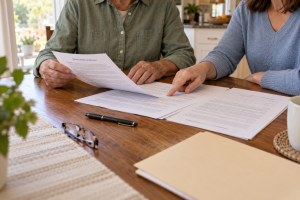
Close-up of two adults reviewing printed paperwork together at a table, with one person pointing to a section of the document.Bring the complete document, including attachments, and any instructions from the attorney, preparer, or organization receiving it. Resolve questions about the document’s contents before the visit. If you need printing, arrange it with me in advance.

Patients sometimes leave their wallets at home. Check for acceptable identification early so someone has time to retrieve it. A hospital wristband or a staff member’s recognition alone does not replace the identification required for notarization. My California notary ID guide explains what to check.

If ID is missing, expired, or unusual, contact me before the appointment. Identification alternatives have specific requirements and need advance discussion.

The signer’s own participation matters

Family members and caregivers are welcome to help arrange the visit. During the notarization, I need to interact directly with the person whose signature is being notarized. They need to give their own responses and be willing to proceed.

Have glasses, hearing aids, and other usual communication supports available. Tell me about the signer’s preferred language or communication needs beforehand; do not assume that a family member can interpret the notarial exchange.

Age, a disability, or difficulty speaking does not by itself answer whether a notarization can take place. We need to consider the particular situation. My role does not include making a medical diagnosis or certifying legal competency.

If writing a signature is difficult

Please mention any physical signing difficulties before the visit. A signer does not necessarily need to reproduce their usual signature perfectly. If they can still sign their name, even if the writing is shaky, abbreviated, or different from what it once was, a regular signature may still be possible.

If the signer cannot write their name and can only make a simple mark, such as an “X,” a signature-by-mark procedure may be an option. This procedure has additional requirements, including witnesses, and is not an automatic solution for every document or situation. Hill Sign does not provide or arrange those witnesses.

Clear responsibilities help the visit go smoothly

Bright, modern healthcare facility reception area with a front desk, comfortable seating, and natural lighting.I handle the requested notarizations and the agreed appointment arrangements. The attorney or document provider addresses legal questions and execution instructions. Family members or the appointment coordinator gather paperwork and ID, check facility procedures, and arrange any required witnesses.

Healthcare staff can help with care and access questions within their roles. Please do not assume that staff will be available or eligible to witness documents.

For an advance health care directive signed by a patient in a skilled nursing facility, an additional designated patient advocate or ombudsman witness is required even when the directive is notarized. Confirm the facility classification and arrange that person before booking. My Power of Attorney & Advance Health Care Directive page explains this document-specific issue.

Bedside notary questions

Can you come today?

Call or text with the location and your timing needs. I’ll confirm whether an appointment is available and what needs to be arranged. Hospital access and same-day service cannot be guaranteed.

Can I schedule for a relative if I cannot be there?

Yes. We can coordinate the visit remotely, including an onsite contact and who will receive the completed documents. Your relative still needs to know about the appointment and participate personally.

Do you bring witnesses?

No. Hill Sign does not provide, recruit, or arrange witnesses. You or your attorney must arrange any required witnesses, including a designated advocate or ombudsman when applicable.

What could delay or prevent notarization?

Access restrictions, medical care, unresolved identification, incomplete paperwork, or missing witnesses may require a change of plans. I also cannot proceed if the signer is unwilling or cannot participate in the required notarial act.

Do hospital or care-facility visits cost extra?

No. I don’t charge a surcharge simply because an appointment takes place at a hospital, assisted living community, or care facility. Standard notarization and travel fees still apply.

I understand that medical care and facility procedures can cause unexpected delays, so I include up to 30 minutes of waiting time at no additional charge. After that, extended waiting is billed at $15 per additional 15 minutes. This applies only to delays, not time spent performing the notarization itself. I’ll discuss any additional charges with you before they begin.

What happens if the visit cannot be completed?

We’ll discuss what prevented completion and whether rescheduling is practical. The travel fee remains due if the signer refuses or is unable to sign. Please review the current pricing and cancellation terms before confirming a visit.

Talk with Greg about a bedside appointment

Share the appointment location and a few details about the situation. We’ll confirm the time, access arrangements, and quote before travel. An online request is a starting point and requires follow-up confirmation.

Call or text Greg at (916) 778-0011 to arrange a bedside visit. Prefer email? Reach me at greg@hillsign.us.